
The quick answer to the question blinds up or down for privacy is simple. Turning the slats downward gives the most privacy at night and during bright daytime hours. Tilting them slightly upward can help in some cases, but downward is the safest choice when you want better privacy inside your home.
People often wonder which way blinds should face for privacy. This guide explains how each angle works and how to choose the right direction for different rooms.
Why Privacy Matters When You Adjust Your Window Blinds
Privacy is something every homeowner wants. You want to sit inside your home and feel safe, comfortable, and unseen by neighbors or people walking outside. Many people think blinds only block sunlight, but the way you angle your blinds changes how much others can see inside. A small tilt can make a big difference in how your home feels.
Most people never think about the direction of the slats. They simply pull the blinds shut and move on. But the angle is what actually gives you privacy. When you learn how the slats work, you are able to control light, comfort, and visibility with one small movement of your hand.
This is why learning the right blind direction helps you protect your space, relax your mind, and feel more in control of your home.
Understanding How Blind Slats Work and Why Their Angle Changes Everything
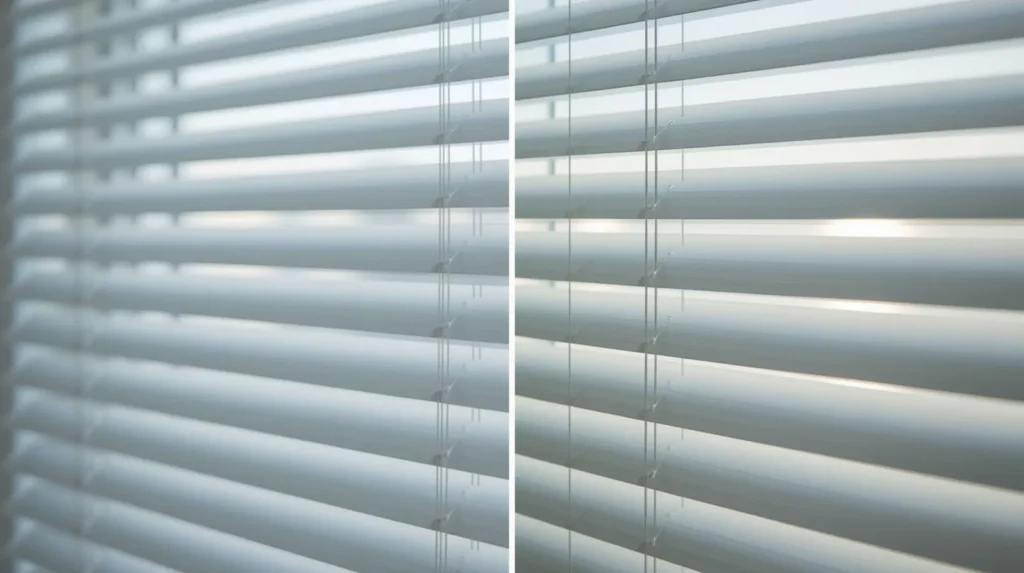
Blind slats are shaped like small flat pieces that move together. When you tilt them, they open or close in a way that changes the view from inside and outside. If the slats point down, they block downward angles from people who stand near your window. If the slats point up, they block upward angles from people looking from below.
Light hits the slats differently depending on how you angle them. When you tilt blinds up or down, the light either bounces upward or downward. This means the inside of your home can look darker, brighter, more open, or more private. This small tilt controls everything.
Understanding these angles helps you make good choices for your comfort.
What People Mean When They Ask About “Blinds Up or Down for Privacy”
People ask this question because they want a simple answer. They want to know the best way to stop people from seeing inside. Sometimes they have tried both angles but are still unsure which one works better. Some think upward tilt looks better. Some think downward tilt feels more natural. Others want more light but also want privacy.
So the main question behind blinds up or down for privacy is this. Which angle blocks the outside view the most, day or night?
This guide gives clear steps so you know exactly what to do without guessing.
How Light and Shadows Change When Blinds Face Up or Down
Light can reveal or hide things inside your home. When sunlight hits the slats, it creates shadows. These shadows can either help your privacy or harm it.
If the slats face down, the light will bounce down toward the floor. This darkens the upper part of the window, making it harder for people to see inside. This is helpful when the sun is strong or when you want more privacy.
If the slats face up, the light hits the slats and bounces upward toward the ceiling. This brightens the top of the room and can sometimes create small gaps that allow someone to see inside.
Understanding how shadows move helps you choose the right direction.
Should Blinds Face Up or Down, and What Does Each Direction Actually Do
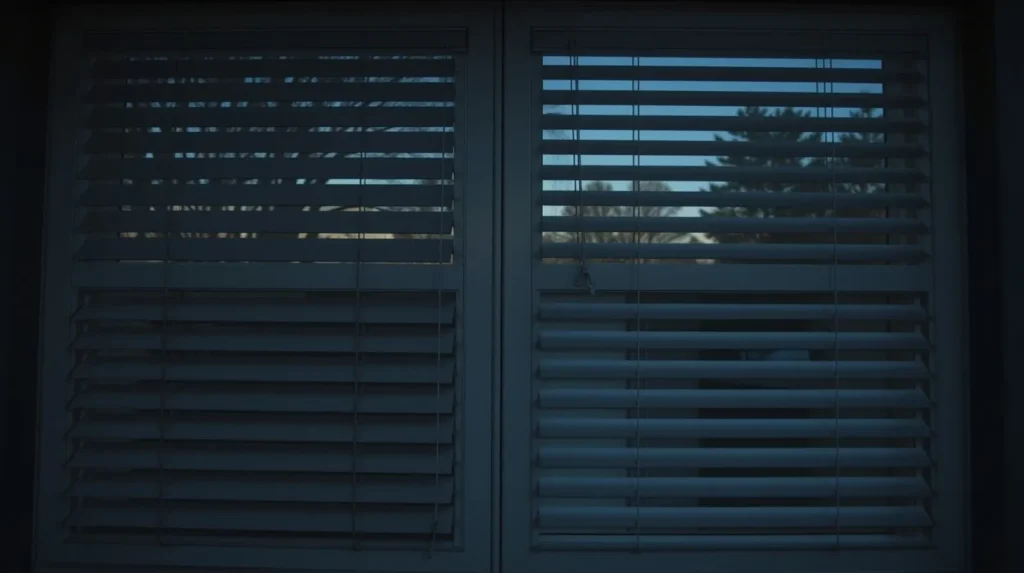
This is the main part people want to understand. When you tilt blinds down, the inside of your home becomes harder to see from outside. This happens because the slats create a barrier. Someone standing outside cannot see through the downward angle. This is why downward tilt is best for privacy.
When you tilt blinds up, you might get some extra light control. You might even block the sun more effectively during certain times of the day. But upward tilt often creates a small space near the bottom of the window that someone can see through. This harms privacy.
So the simple rule is this. Downward tilt gives the best privacy. Upward tilt helps with light but is not great for privacy.
Blinds Which Way for Privacy, and When Each Option Works Best
Privacy needs change during the day, so it helps to look at each tilt angle as its own option. Each one works better in a different situation. Here are the clear choices so you can pick the right one for your home.
Option 1. Tilt Blinds Down for Strong Privacy
This option gives the best privacy in most cases. When the slats point downward, people outside cannot see inside easily. The slats block downward lines of sight, which protects bedrooms, living rooms, and street facing windows. This setting works best at night when your indoor lights are on.
Best for:
• Nighttime
• Bedrooms
• Street facing windows
• Homes close to sidewalks or neighbors
Option 2. Tilt Blinds Up for Better Sun Control
Tilting the blinds upward helps when the sun shines strongly through your windows. It pushes the light up toward the ceiling. This option works well if your main goal is to reduce glare on screens or furniture.
It does not give strong privacy, because small openings near the bottom of the window can make it easier for someone outside to see inside.
Best for:
• Afternoon sun
• Reducing glare
• Rooms where privacy is not the main focus
Option 3. Keep Blinds Level for Light With Soft Privacy
When the slats sit flat, you allow more light into the room. Privacy increases a little, but not as much as the downward tilt. This is a good middle choice for the daytime when you want a bright room but do not want the window fully open.
Best for:
• Daytime with natural light
• Living rooms
• Spaces where you want brightness and mild privacy
Option 4. Slight Downward Tilt for Balanced Light and Privacy
This is a gentle version of the full downward tilt. It lets soft light enter while still blocking outside eyes. Homeowners often choose this when they want privacy but also want the room to feel open.
Best for:
• Homes with close neighbors
• Areas facing the street
• Maintaining privacy without making the room dark
Option 5. Full Closure for Maximum Privacy Anytime
When you tilt the blinds fully closed downward, you get the highest level of privacy. This option blocks outside views completely. It is great for bathrooms, bedrooms, or moments when you want peace and quiet.
Best for:
• Total privacy
• Nighttime rooms
• Areas that need full coverage
Each option solves a different problem. Once you understand how the angle changes the view, you can choose the best tilt for every time of day and every room in your home.
Tilt Blinds Up or Down, a Simple Method to Block Outside Views
You do not need any fancy tools or special settings. You simply turn the tilt wand or use the cord to move the slats. If someone outside cannot see through the angle, then you have chosen the right direction.
Tilt the blinds down if you want to block views from people walking by or neighbors nearby. This is the quickest method to protect your privacy. You will notice that your room still gets light, but no one can see directly inside.
Tilt them up only when you want to control sunlight more than privacy. This could be during the afternoon when the sun hits your window at a harsh angle.
This simple method works for almost every room in every home.
How to Choose the Best Blind Direction for Bedrooms, Living Rooms, and Street Facing Windows
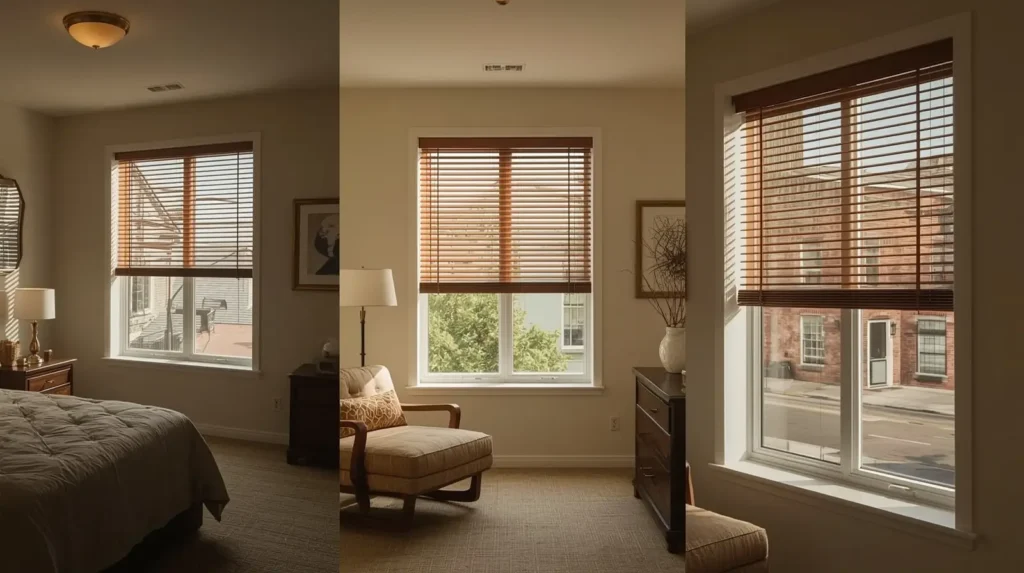
Different rooms need different levels of privacy. Bedrooms usually need the most privacy, especially at night. For bedrooms, downward tilt is the best choice because it hides the inside of the room well.
Living rooms often face the street. People might walk by or drive by often. You want privacy but also want natural light. Here, you can set the blinds down but leave a slight opening to let some brightness in. This gives you light and privacy at the same time.
Street facing windows usually need strict privacy. Downward tilt works best again. It blocks the view from outside without making your home completely dark.
By changing the angle slightly in each room, you can control the atmosphere and privacy level.
Privacy Tips for Homes in Orange County That Deal With Bright Sun and Close Neighbors
Homes in this area often deal with strong sunlight and homes built close together. Many families want more privacy while still enjoying bright rooms. A downward tilt helps block the view from outside while allowing gentle light to enter.
Because the sun can be intense, you can tilt the blinds slightly down to avoid glare while keeping privacy strong. You can also adjust the angle during different times of day to keep rooms comfortable.
This small choice protects your home from bright sun and curious eyes.
Why Black’s Shutters Shades & Blinds Recommends a Proper Installation for Better Privacy Control
Proper installation plays a big role in privacy. If blinds are installed too loose or too tight, the slats might not sit correctly. Gaps can appear, making it easier for people to see inside. A well installed blind sits close to the window frame and gives you better control of the tilt.
Black’s Shutters Shades & Blinds teaches homeowners how to tilt blinds correctly after installation. Our team knows how small details affect privacy. Good installation helps blinds close tightly, move smoothly, and stay secure for years.
When your blinds sit the right way, you get true privacy with one simple tilt.
Final Guidance, How Proper Blind Angles and Professional Installation Improve Comfort and Privacy
Choosing the right blind angle gives you a quiet and private home. Downward tilt protects your home during the day and at night. Upward tilt can help with sunlight at certain times, but it does not offer strong privacy. With the right angle, you feel safer and more comfortable in your space.
Professional installation from a trusted team like Black’s Shutters Shades & Blinds ensures that every blind works the way it should. When blinds are installed well, they move smoothly and block outside views better than old or loose blinds. Learning how to tilt blinds the right way gives you control. A simple tilt creates a home that feels peaceful and private. Your comfort matters.
If you want help installing blinds that give you stronger privacy, reach out for support. Our team can help you find the right style, fit, and setup, so your home feels safe and comfortable every day.